
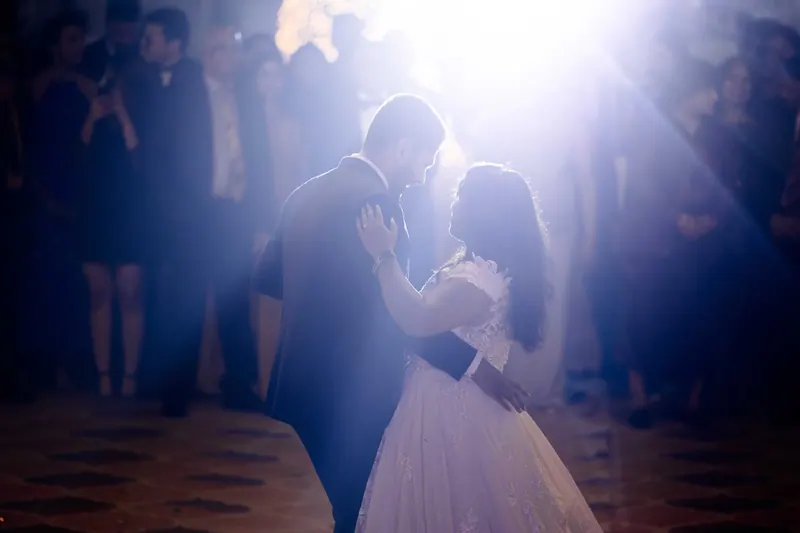
A cinematic film follows the feeling
A cinematic wedding film is a considered edit rather than a full record of the day. It may bring together preparation, rituals, reactions, atmosphere and recorded voices to create a short story. The sequence need not follow the order in which the events happened. Discuss the kind of film you enjoy and ask to see a complete example, not only a short social-media clip.
Traditional video keeps the sequence
Traditional videography places greater emphasis on recording the ceremonies and events in their order. It is useful when family members want to revisit a ritual, a speech or a performance more fully. Agree which events will be covered and what edited recordings you will receive. Ask what is included in the proposal rather than assuming that every camera recording will be supplied.
Sound and coverage need a plan
If vows, a speech or a performance are important to the film, tell the team beforehand. Ask how audio will be coordinated with the venue and event team. Share the schedule and the people whose reactions matter most. For ceremonies with restrictions on movement or equipment, discuss camera positions with the relevant venue contact so the plan fits the setting.
Choose the deliverables you will actually watch
Many families value both approaches, but the right choice depends on your priorities and coverage plan. Compare a cinematic film, traditional event videos, a same-day edit and short social clips as separate deliverables. Agree music choices, versions, delivery dates and any revision process in writing. A clear list is more useful than a package name that leaves everyone imagining something different.