
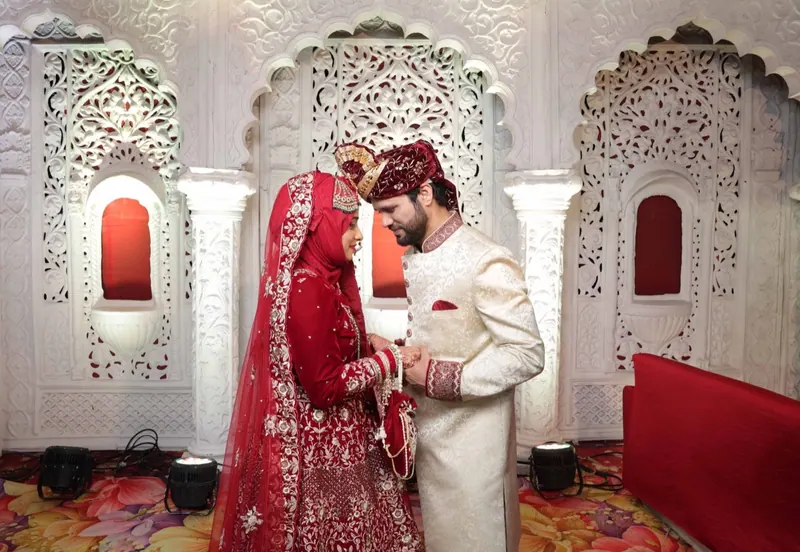
Agree what can be photographed
Ask the couple and the person coordinating the ceremony which moments they would like recorded, which areas are private and whether any guests prefer not to be photographed. Practices vary between families and settings, so avoid working from assumptions. Share the agreed boundaries with every photographer and filmmaker who will attend, including anyone covering preparation in a separate space.
Share the ceremony arrangements
Tell the team where each part of the ceremony will take place, who the main contacts are and how the programme is expected to run. Discuss where photographers can stand and whether lighting or camera movement needs to be limited. The aim is to make the coverage unobtrusive while ensuring that important moments are not missed because the team was waiting in the wrong area.
Plan portraits and family groups calmly
Decide whether couple portraits fit better before or after the ceremony, and identify a comfortable setting close to the event. A short family list helps when there are several groups to photograph. Include the people who may need seating or extra time. For a walima or reception on another day, make a separate coverage plan rather than assuming that the same timings and portrait arrangements will apply.
Discuss sharing and gallery access
Agree which photographs can appear in a public portfolio and which should remain private. If you choose guest photo delivery through PIK Connect, ask how access will be set up and what the platform’s guest and privacy process will involve for your event. Make these choices before delivery so the team can prepare the right gallery rather than change sharing arrangements after links have circulated.